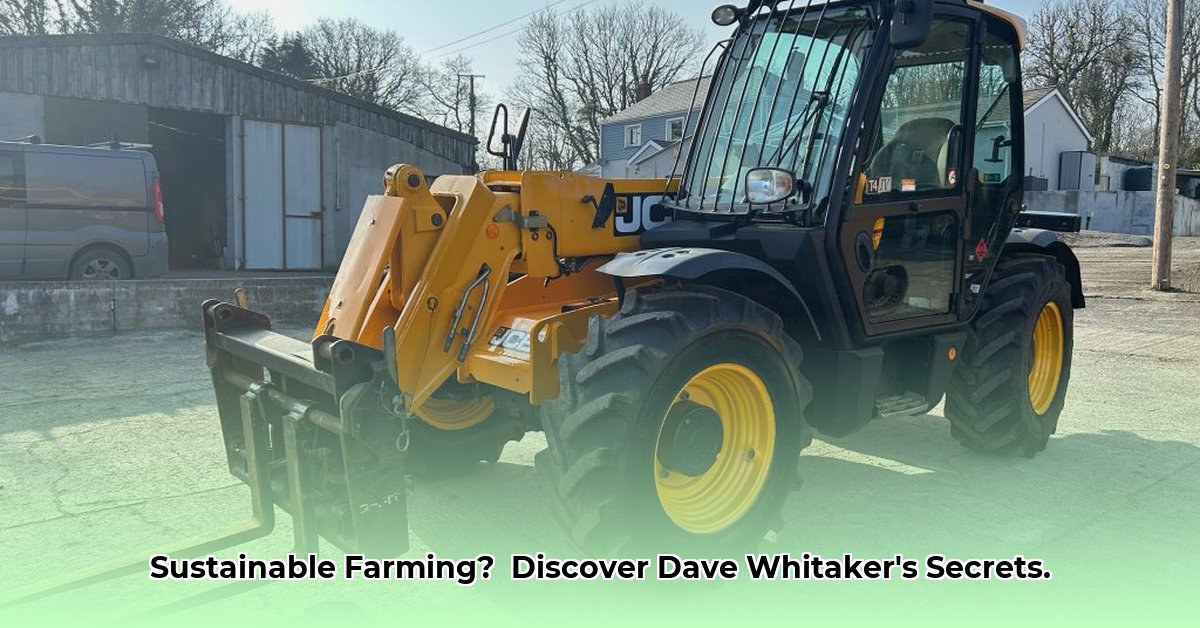
Sustainable farming practices are crucial for the future of our planet. However, the high cost of new agricultural equipment often presents a significant barrier, particularly for small-scale farmers. Used tractors offer a viable, more affordable alternative, but choosing wisely and operating sustainably requires careful planning. This guide will equip you with the knowledge and tools to make informed decisions, focusing on how to maximize your investment while minimizing your environmental footprint. We'll explore practical steps for selecting, maintaining, and responsibly disposing of used tractors, while also highlighting the role of government policies and the responsibilities of equipment providers like Dave Whitaker Tractors. For more on tractor operation, see this helpful guide.
Choosing the Right Used Tractor: A Step-by-Step Guide
Purchasing a used tractor is a substantial investment. A thorough inspection is essential to avoid costly repairs down the line. This section provides checklists for both small-scale and large-scale farmers, helping you identify key indicators of a reliable and sustainable machine.
For Small-Scale Farmers: Maximizing Value on a Budget
Budget constraints are often paramount for smaller farms. However, neglecting maintenance will ultimately prove more expensive in the long run. This checklist will help you prioritize key areas:
Engine Inspection: Carefully listen for unusual noises (knocking, rattling, whining) during start-up and operation, indicative of potential problems. Check oil and coolant levels for leaks. (Low levels suggest potential leaks requiring repair).
Hydraulic System Assessment: Inspect for leaks. The hydraulics should respond smoothly and promptly to controls; sluggishness suggests potential issues requiring attention.
Transmission Evaluation: Shift through all gears; smooth engagement and disengagement indicate a well-maintained transmission, crucial for fuel efficiency and longevity. Grinding or hesitation signals potential problems.
Tire Condition Check: Examine tire tread depth for wear. Proper inflation is vital for fuel efficiency and traction. Worn tires increase fuel consumption and reduce performance.
Structural Integrity Assessment: Thoroughly check the tractor's body for rust, dents, or signs of damage. A sturdy structure is vital for safety and longevity. Significant damage can lead to costly repairs.
For Large-Scale Farmers: Balancing Cost and Efficiency
Large-scale farms frequently face a more complex decision when choosing between a new, high-efficiency tractor and a used model. A thorough cost-benefit analysis is necessary:
Comprehensive Cost-Benefit Analysis: Compare the initial purchase price of a new vs. used tractor with projected fuel economy, maintenance costs, potential downtime, and the estimated lifespan of each machine.
Trade-In Program Exploration: Investigate trade-in programs offered by dealerships, which can significantly reduce upfront costs when upgrading equipment.
Precision Agriculture Integration: Assess the feasibility of integrating precision agriculture technologies (GPS-guided systems, variable rate application) with a used tractor to optimize resource use and minimize waste. This can potentially offset the initial cost savings of a used tractor.
Integrating Technology: Smart Farming with Used Equipment
Older equipment doesn't mean you're missing out on technological advancements. Many precision agriculture technologies are compatible with used tractors. GPS-guided systems, for example, can optimize operations, minimizing waste and significantly boosting farm efficiency. Always verify compatibility between the technology and the specific tractor model before purchase.
The Role of Government and NGOs: Policy and Support
Governments and NGOs play a crucial role in supporting sustainable farming practices. Policies and programs that incentivize fuel-efficient equipment, establish responsible disposal programs, and fund research into sustainable tractor maintenance are all essential. These initiatives are crucial for promoting a more environmentally-conscious agricultural sector.
Recommendations for Dave Whitaker Tractors: Enhancing Sustainability
Dave Whitaker Tractors, and other used equipment suppliers, can significantly contribute to a more sustainable agricultural sector by prioritizing the following:
Extended Warranties: Offering extended warranties on used equipment builds customer confidence and demonstrates a dedication to quality.
Emission Profile Transparency: Make detailed information about the emission profiles of each tractor readily available. This transparency empowers farmers to make informed decisions.
Maintenance Training Programs: Invest in comprehensive training programs for farmers on proper tractor maintenance. Regular maintenance extends lifespan and minimizes environmental impact.
Responsible Disposal Partnerships: Partner with reputable recycling companies to establish a closed-loop system for tractor disposal and recycling, promoting environmental responsibility.
Building a Sustainable Future: A Collaborative Effort
The used tractor market presents a significant opportunity to make agriculture more sustainable. Responsible purchasing, operation, and disposal practices, coupled with supportive government policies and the proactive engagement of equipment providers like Dave Whitaker Tractors, are essential for striking a balance between affordability and environmental stewardship. The choices we make today will have a lasting impact on the future of farming. Further research and data collection are crucial for a more comprehensive understanding of the environmental impact of used tractors and the implementation of effective solutions.